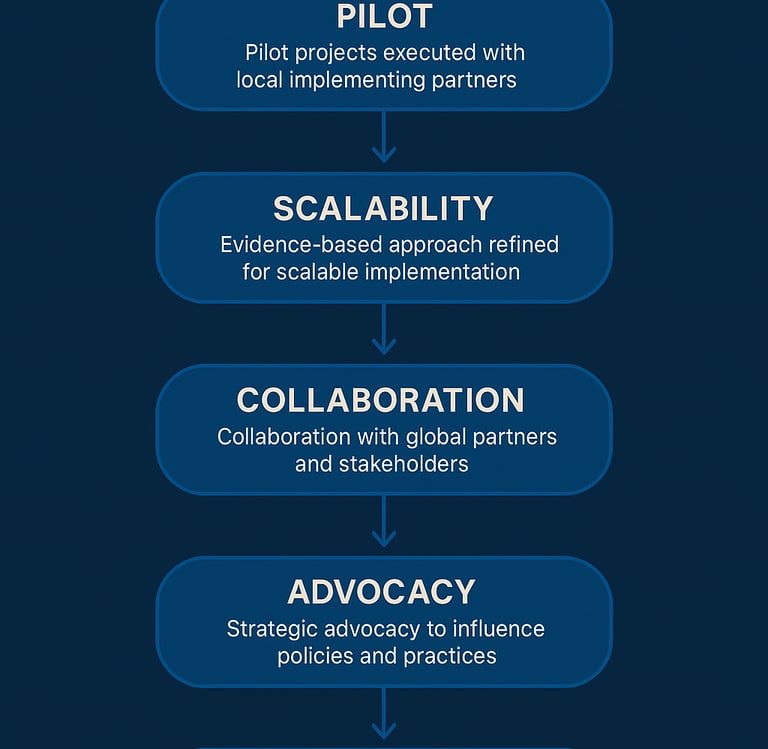
🌍 PeerPass Global
Inclusion Plan —
From Pilot to Worldwide Impact
Vision
To create a world where every human being has a verifiable digital identity, independent of geography, status, or privilege — enabling access to education, healthcare, finance, and opportunity through ethical technology and collective trust.
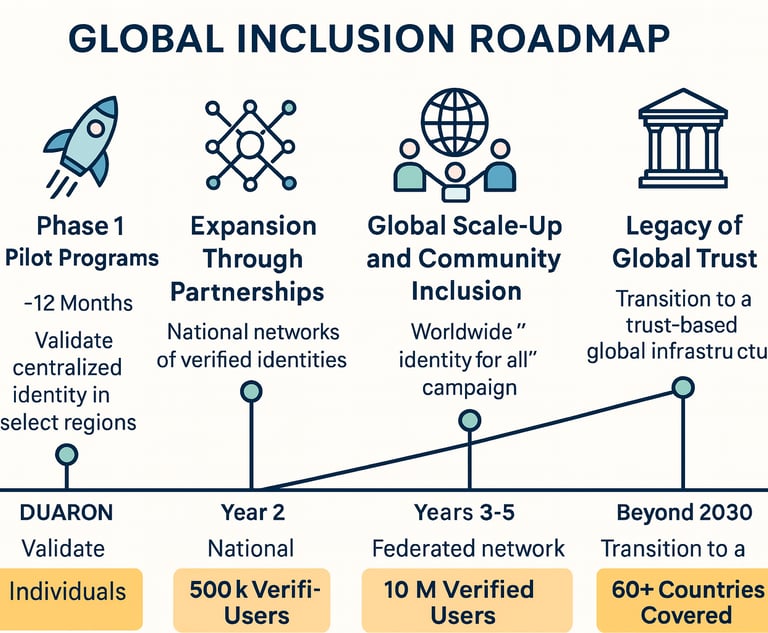
Phase 1: Pilot Programs (Proof of Concept)
Duration: 6–12 months
Objective: Validate PeerPass’s decentralized identity system and philanthropic framework in controlled environments.
Key Actions
Select Pilot Regions:
Partner with local NGOs, municipal governments, and universities in target regions such as India, Timor-Leste, the Philippines, and Indonesia, as well as Africa
Prioritize communities without reliable ID access (e.g., displaced populations, informal workers, students).
Deploy PeerPass Digital ID Wallets:
Issue Self-Sovereign Identities (SSIs) using W3C DID and Verifiable Credential standards.
Onboard individuals via mobile-based peer verification.
Train Local Partners:
Conduct workshops for government officials, NGOs, and volunteers on identity ethics, privacy, and system use.
Track Impact Metrics:
Number of verified users
Accessibility improvements (healthcare, education, aid)
Transaction transparency via blockchain dashboard
🧭 Goal: Successfully verify the first 10,000 individuals, proving scalability and ethical compliance.
Phase 2: Expansion Through Partnerships
Duration: Year 2
Objective: Establish national networks of verified identities through strategic partnerships and cross-sector collaboration.
Key Actions
Forge Institutional Alliances:
Collaborate with banks, telecom companies, and universities for mass onboarding.
Partner with ministries of education and social welfare to use PeerPass IDs as gateways for benefits.
Launch “Verified by PeerPass” Certification:
Introduce a trust badge for organizations using PeerPass verification in HR, aid, and governance.
Integrate Blockchain Philanthropy Ledger:
Link donations, scholarships, and aid directly to verified beneficiaries.
Allow donors to track their impact through real-time, transparent dashboards.
Build Data Resilience & Security Layer:
Use decentralized storage (IPFS, Filecoin) and Zero-Knowledge Proofs for anonymous verification.
🌐 Goal: Expand coverage to 500,000 verified users across at least four countries.
Phase 3: Global Scale-Up and Community Inclusion
Duration: Years 3–5
Objective: Achieve large-scale adoption of PeerPass as a universal identity and trust framework recognized across nations.
Key Actions
Global Identity Inclusion Drive:
Launch a worldwide campaign: “Identity for All” — targeting 10 million verifiable users.
Work with international NGOs, UN agencies, and development funds.
AI-Driven Outreach Platform:
Deploy AI tools to identify high-need communities and optimize resource allocation.
Match volunteers and donors through AI-powered trust scoring.
Policy & Advocacy:
Present PeerPass framework to governments and global think tanks as a model for ethical digital inclusion.
Contribute to open standards for decentralized verification globally.
Digital Literacy & Education:
Offer free global learning modules on digital rights, security, and inclusion in multiple languages.
🚀 Goal: Reach 10 million verified global citizens, representing all major continents.
Phase 4: Full Ecosystem Integration
Duration: Years 5–10
Objective: Make PeerPass a trusted global identity infrastructure linking individuals, institutions, and impact networks.
Key Actions
Launch PeerPass Global Network (PGN):
A federated network of verified identities, NGOs, corporates, and governments.
Introduce interoperable credentials across healthcare, education, and aid systems.
Integrate Digital Currency for Good:
Introduce PeerTokens — a non-speculative digital reward token for verified contributions and social impact.
Tokens can be used for training, scholarships, and community projects.
Expand AI-Empowered Analytics:
Predict needs of vulnerable populations using AI and community feedback loops.
Publish annual “Trust Index Reports” measuring inclusion, ethics, and transparency.
Sustainability & Governance:
Establish PeerPass DAO (Decentralized Autonomous Organization) for transparent community-led governance.
Allocate revenue from partnerships to Philanthropy Pools supporting local empowerment.
🌏 Goal: 100 million verified users empowered through identity, inclusion, and innovation.
Phase 5: Legacy of Global Trust
Duration: Beyond 2035
Objective: Transition PeerPass Foundation into a self-sustaining global trust ecosystem recognized by international institutions.
Key Actions
Institutionalize PeerPass standards as part of UNDP, World Bank, and ITU frameworks for digital inclusion.
Partner with education ministries to integrate PeerPass IDs as lifelong learning credentials.
Expand the Philanthropy DAO to directly finance verified social causes and micro-entrepreneurs.
Establish the PeerPass Global Institute for Ethical Technology — training leaders in digital ethics, AI governance, and social innovation.
🏛️ Goal: Build a legacy of trust-based civilization, where technology serves humanity with compassion and purpose.
Success Metrics
Impact DimensionTargetTimelineIndividuals Verified100 million2035Countries Covered60+2035Partner Organizations5,000+2030Verified Aid Disbursed$1 Billion+2032Volunteer Engagements1 Million2035
Core Belief
“Identity is not just data — it is dignity.
Inclusion is not a privilege — it’s a promise.
PeerPass is the bridge that makes both possible.”